
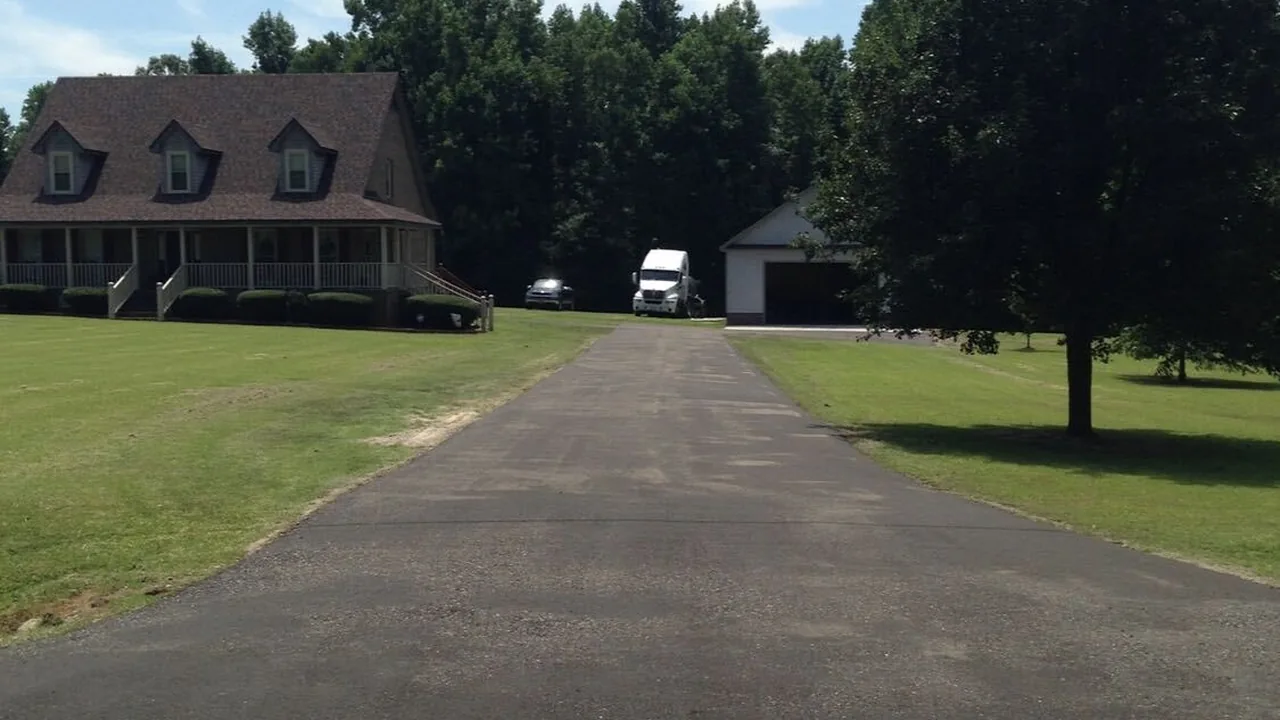
Recycled Asphalt, Gravel or Hot Mix: Which Driveway Holds Up in South Georgia?
Gravel costs the least to put down and needs the most upkeep. Hot mix asphalt costs the most and sheds water best. Recycled asphalt sits between them, and it binds into a firm surface as it cures. On a long drive over South Georgia sand, that middle option often fits best.
One national cost guide puts an installed gravel drive at $1.25 to $4.00 a square foot. The same guide puts recycled asphalt at $3 to $8 and hot mix at $7 to $13. Those are market numbers, not our price list.
All State Trucking, Paving and Construction is an asphalt paving contractor in Waycross, and we build all three. Recycled asphalt is our specialty, and this guide still names the drives where it is the wrong pick.
How do recycled asphalt, gravel and hot mix compare?
| What to compare | Gravel or crusher run | Recycled asphalt | Hot mix asphalt |
|---|---|---|---|
| What it is | Crushed stone with sand and stone dust | Old asphalt, crushed and screened | Stone and asphalt mixed hot at a plant |
| How it goes down | Spread and graded over firm ground | Laid with a paving machine, then rolled | Laid hot over a stone base, then rolled |
| In sand and heavy rain | Loose stone ruts and washes where water runs | Firms up with time; still needs a crowned base | Sheds water off the top; the base still has to drain |
| Upkeep | Add stone and regrade | Re-roll loose spots; a look every three to five years | Sealer every two to five years |
| Looks | Loose gray stone | Dark, with a rough face | Smooth black surface |
| Material, per ton | $20 to $40 (crusher run) | $10 to $20 | $100 to $200 |
| Installed, per square foot | $1.25 to $4.00 | $3 to $8 | $7 to $13 |
The cost rows come from one national cost guide, updated in 2026. Other guides run wider on gravel, from $1 to $3 up to $4 to $10 a square foot. Read the cost rows as a ranking, and get a written quote for the real number.
Tons are only part of the bill. Grading, the base, the haul and the rolling make up the rest.
How is each driveway built?
All three start with the ground under them. An asphalt trade group’s driveway guide says weak spots get cut out and replaced. It also calls for a crown and slopes that drain. Under Georgia’s one-call law, machine grading counts as digging, so utility lines get marked through 811 first.
A gravel drive is crusher run or crushed concrete, spread and graded over firm ground. One national cost guide calls for at least 5 to 6 inches of stone. We haul the stone in our own dump trucks.
Millings come off old roads and lots, where a milling machine grinds away the worn top layer. Federal highway guidance says properly crushed and screened millings are well-graded stone coated in asphalt. We use crushed, screened millings that have been ground twice. A paving machine lays them, and a vibratory roller presses them in.
Hot mix comes from a local asphalt plant and goes down hot over a crushed stone base. The trade group’s guide says 6 to 8 inches of that base is usually enough. On top go a 2 inch bottom course and a 1.5 inch surface course. We lay it with the same paving machine and roller.
How does each surface hold up in sand and heavy rain?
Rain is the real test here. Federal climate normals put Waycross at about 50 inches a year, and June through August bring almost 19 of them. The most common soil around Waycross in the federal soil survey is Pelham loamy fine sand. The survey calls it poorly drained, with a water table that can reach the surface.
Gravel lets rain through, but loose stone moves when water runs across it. One national cost guide says poor grading leads to puddles and erosion. On soft ground, the same guide puts fabric under the stone to keep it from sinking. Another calls a badly installed gravel drive prone to ruts.
Millings start out loose too, and the old asphalt on every piece changes that. Federal highway guidance says that asphalt has a significant strengthening effect with time. It also says the coating makes the material harder to pack, so the rolling counts. On our jobs, the surface tightens and cures over the months after it goes down.
Hot mix sheds rain off the top, so its weak point is underneath. The trade group’s guide puts drainage and the crown in the design step, before any paving. On flat, wet ground, the grading under a drive decides more than the surface on top.
How much upkeep does each surface need?
Gravel needs the most. One national cost guide says to add stone at least once a year. It prices regrading a worn drive at $0.50 to $2.20 a square foot.
A millings drive needs less. The same guide suggests a look every three to five years, with re-rolling where the surface loosens. It prices that re-compaction at $1 to $5 a square foot.
Hot mix wants a sealer every two to five years, the trade group’s guide says. The first coat waits until the drive is several months old. Small cracks and holes get filled as they show up.
What does each surface look like?
Gravel looks like loose stone, gray for crusher run and lighter for crushed concrete. Some of it ends up in the grass, so one cost guide recommends an edge border. Millings are old asphalt, so they go down dark with a rough face. Hot mix is the smoothest and darkest of the three, with clean edges at the road and the garage.
Which surface fits which drive?
Gravel fits a long farm lane or a drive you plan to pave later. It costs the least per square foot, and it can be graded back into shape after a washout. We install gravel and crusher run driveways across the area.
Recycled asphalt fits long rural drives and parking pads that rut or wash out as gravel. It can also top an old gravel drive or a worn asphalt drive. Our page on recycled asphalt driveways covers both. Millings are the wrong pick for a smooth game court or a short drive where looks come first.
Hot mix fits a short drive in town or a game court by the house. It gives the smoothest ride at the highest price. See hot mix asphalt driveway paving for how we build one.
Loaded trucks change the answer for all three. One cost guide calls for 8 to 12 inches of gravel where trucks or RVs run. A busy farm lane needs a deeper base, whatever goes on top.
How do you get a written quote for your drive?
Every number above is a market range, not our price list. Your price comes down to the length, the base, the grading and the haul. We look at the drive and put the quote in writing. We give a free estimate, and the written quote covers the material, the hauling and the install.
We work within about 50 miles of Waycross. Call or text (912) 239-0212, or read more about our paving work around Waycross.